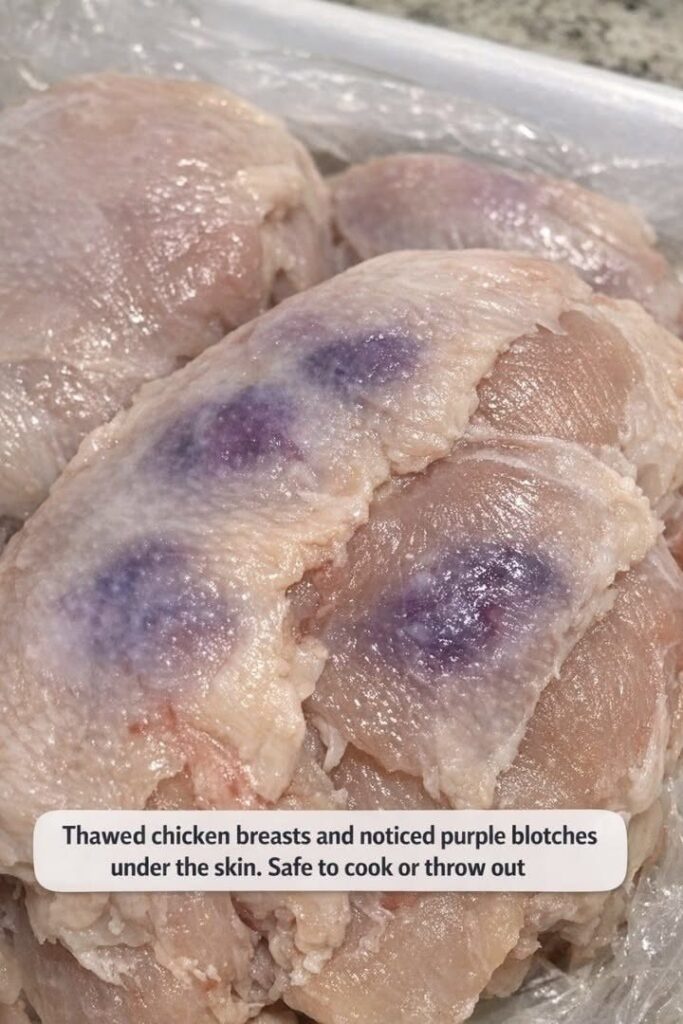
Is Chicken with Purple Discoloration Safe to Eat?
ADVERTISEMENT
Generally, yes.
Color alone is not a reliable indicator of freshness.
Many fresh chicken products display natural color variations ranging from pale pink to darker red or purple areas.
ADVERTISEMENT
Instead of focusing only on appearance, evaluate the chicken using several factors.
Signs the Chicken Is Likely Safe
- Mild or neutral smell
- Firm texture
- No sticky or slimy surface
- Proper refrigeration
- Packaging date still within recommended use period
If these conditions are met, the chicken is often perfectly safe to cook.
Warning Signs of Spoiled Chicken
While purple spots alone are usually harmless, certain signs should never be ignored.
Discard chicken if you notice:
Strong Unpleasant Odor
Fresh chicken should have little to no smell.
A sour, rotten, sulfur-like, or ammonia odor is a strong indicator of spoilage.
Slimy or Sticky Texture
Fresh chicken should feel moist but not sticky.
A slippery coating often signals bacterial growth.
Unusual Color Changes
Gray, green, yellow, or iridescent discoloration may indicate deterioration.
Improper Storage
Chicken that has been left at unsafe temperatures for extended periods should be discarded.
When food safety is uncertain, it’s always better to err on the side of caution.
Can You Trim Away the Purple Areas?
Yes.
If the appearance is unappealing, you can remove the discolored portions before cooking.
The darker areas are often simply bruised tissue or trapped blood and typically do not affect flavor or texture.
Many times, the discoloration becomes far less noticeable after cooking.
Why Color Isn’t Always a Reliable Food Safety Indicator
Many consumers assume fresh chicken must be uniformly pink.
In reality, chicken color can vary naturally due to:
- Age of the bird
- Muscle activity
- Oxygen exposure
- Packaging methods
- Freezing and thawing
Two chicken breasts from the same package may not even look identical.
That’s why food safety experts recommend evaluating smell, texture, storage history, and expiration dates rather than relying solely on color.
Safe Cooking Guidelines
Regardless of appearance, chicken should always be cooked thoroughly.
Recommended Internal Temperature
Cook chicken until it reaches an internal temperature of:
165°F (74°C)
Using a food thermometer is the most reliable way to ensure poultry is safely cooked.
Proper cooking destroys harmful bacteria that may be present in raw poultry.
Frequently Asked Questions
Are purple spots on chicken normal?
Yes. They are often caused by bruising, broken blood vessels, or trapped blood beneath the skin.
Does freezing make purple spots more visible?
Yes. Freezing and thawing can sometimes make discoloration appear more noticeable.
Can I eat chicken with dark red patches?
In many cases, yes, provided the chicken smells normal, feels firm, and has been stored properly.
Should I throw away chicken because of color alone?
Not necessarily. Color variations are common and should be evaluated alongside smell, texture, and storage conditions.
Final Verdict
If your chicken breast has purple or dark patches but otherwise smells fresh, feels firm, and has been properly refrigerated, there is usually no reason for concern.
These spots are commonly the result of bruising or trapped blood rather than spoilage.
The best approach is to assess the chicken as a whole rather than judging freshness by color alone. When properly stored and cooked to a safe internal temperature, chicken with purple discoloration is often just as safe and nutritious as any other piece of poultry.
Understanding these natural variations can help reduce food waste while ensuring safe and confident cooking.
ADVERTISEMENT