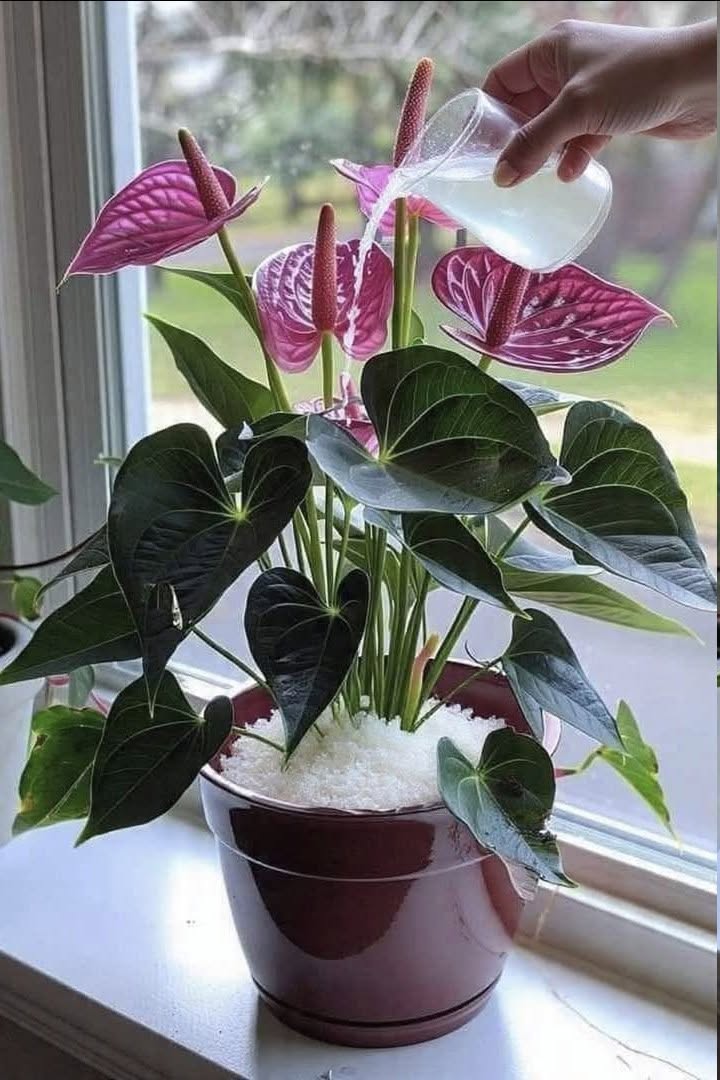
Learn how to care for Anthurium plants with expert tips on watering, light, soil, and fertilizing. Discover how to encourage healthy growth and long-lasting blooms indoors.
Anthurium Care Guide: How to Keep Your Flamingo Flower Healthy and Blooming
With their glossy green leaves and vibrant heart-shaped flowers, Anthuriums are among the most popular indoor flowering plants. Often called the Flamingo Flower or Laceleaf, these tropical beauties bring color and elegance to homes year-round.
The good news is that Anthuriums are relatively easy to care for when their basic needs are met. With proper watering, lighting, humidity, and nutrition, these stunning plants can reward you with healthy growth and frequent blooms throughout the year.
Here’s everything you need to know to keep your Anthurium thriving.
Understanding Anthuriums
Native to tropical rainforests, Anthuriums naturally grow in warm, humid environments beneath the forest canopy. This means they prefer:
- Bright indirect light
- Warm temperatures
- Moderate humidity
- Well-draining soil
- Consistent but careful watering
Replicating these conditions indoors is the key to success.
1. Watering Your Anthurium Properly
One of the most common mistakes Anthurium owners make is overwatering.
These plants enjoy moisture but dislike soggy roots.
Best Watering Practice
- Water when the top inch of soil feels dry.
- Use room-temperature water.
- Allow excess water to drain completely.
- Never let the pot sit in standing water.
Signs of Overwatering
- Yellowing leaves
- Soft stems
- Root rot
- Fungal problems
Signs of Underwatering
- Drooping leaves
- Dry leaf edges
- Slower growth
Maintaining balanced moisture is essential for long-term health.
2. Give Anthuriums the Right Amount of Light
Light plays a major role in flowering.
Ideal Lighting Conditions
Anthuriums thrive in:
- Bright indirect sunlight
- Filtered natural light
- East-facing windows
- North-facing windows
Too much direct sunlight can burn the leaves, causing brown spots and discoloration.
If your plant isn’t blooming, insufficient light is often the cause.
3. Choose the Best Soil