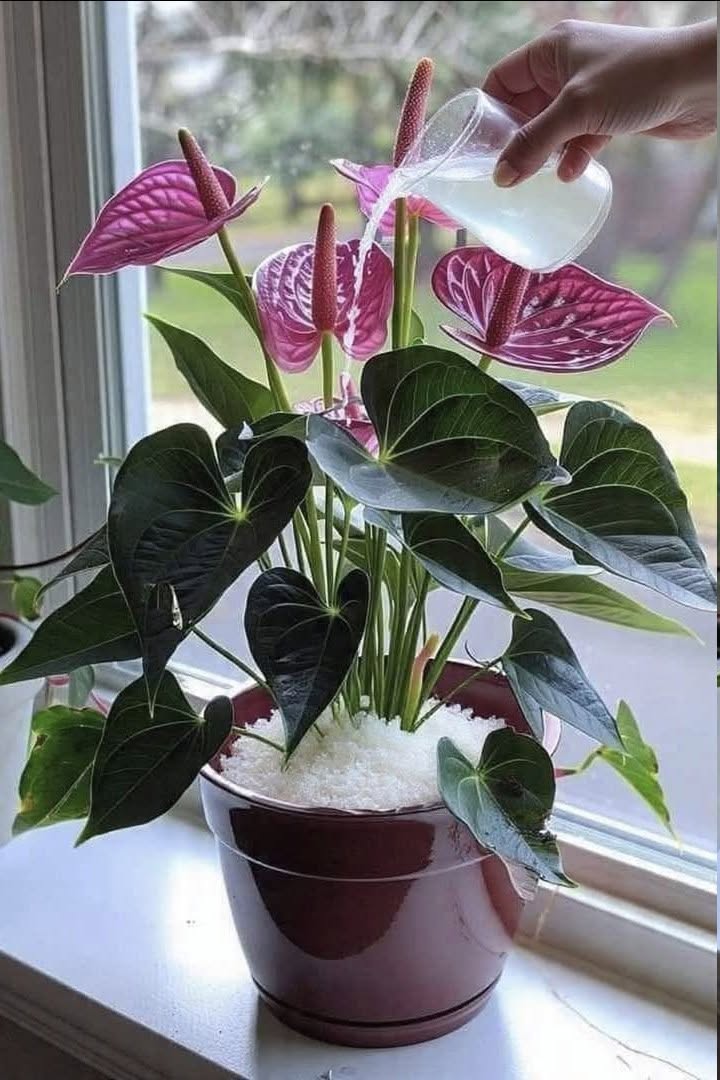
3. Choose the Best Soil
Because Anthuriums are naturally epiphytic plants, they need soil that provides excellent airflow around the roots.
Recommended Potting Mix
A combination of:
- Orchid bark
- Perlite
- Peat moss or coco coir
This mixture allows water to drain efficiently while retaining enough moisture for healthy growth.
Repotting Tips
Repot every 2–3 years or when:
- Roots outgrow the container
- Soil becomes compacted
- Drainage decreases
Fresh potting mix helps replenish nutrients and improve root health.
4. Fertilizing for Healthy Growth
Regular feeding encourages stronger foliage and more frequent blooms.
During Spring and Summer
Apply a balanced liquid fertilizer every 6–8 weeks.
Always dilute fertilizer to:
- Half strength
- Or quarter strength
This helps prevent fertilizer burn.
During Fall and Winter
Reduce or stop fertilizing, as plant growth naturally slows during cooler months.
How to Encourage Anthuriums to Bloom More Often
Healthy foliage is important, but most plant lovers are especially interested in flowers.
Here are the best ways to encourage blooming.
Provide Bright Indirect Light
Flower production requires energy.
Aim for:
- At least 6 hours of bright indirect light daily
Plants kept in dim areas often produce fewer blooms.
Maintain Warm Temperatures
Anthuriums thrive between:
65°F and 80°F (18°C to 27°C)
Avoid:
- Cold drafts
- Air conditioning vents
- Temperatures below 50°F (10°C)
Consistent warmth supports flower development.
Increase Humidity
As tropical plants, Anthuriums appreciate moderate humidity.
You can increase humidity by:
- Using a humidifier
- Placing a pebble tray beneath the pot
- Grouping plants together
Higher humidity often improves leaf quality and overall vigor.
Remove Spent Blooms
Deadheading old flowers allows the plant to direct energy toward producing new growth and future blooms.
Simply trim faded flower stems near the base using clean pruning scissors.
Common Anthurium Problems and Solutions
Yellow Leaves
Usually caused by:
- Overwatering
- Poor drainage
- Excess fertilizer
Brown Leaf Tips
Often linked to:
- Low humidity
- Underwatering
- Salt buildup in soil
Lack of Flowers
May result from:
- Insufficient light
- Inadequate nutrition
- Cool temperatures
Adjusting these conditions often restores blooming.
Benefits of Growing Anthuriums Indoors
Beyond their striking appearance, Anthuriums offer several benefits:
- Long-lasting blooms
- Attractive year-round foliage
- Easy indoor care
- Tropical decorative appeal
- Suitable for homes and offices
Their colorful flowers can remain attractive for weeks, making them one of the most rewarding houseplants to grow.
Frequently Asked Questions
How often do Anthuriums bloom?
Healthy Anthuriums can bloom multiple times throughout the year when provided with proper care.
Do Anthuriums like direct sunlight?
No. Direct sunlight can scorch the leaves. Bright indirect light is ideal.
Should I mist my Anthurium?
Occasional misting can help increase humidity, but avoid leaving excess moisture on the leaves for extended periods.
How long do Anthurium flowers last?
Individual blooms can remain attractive for several weeks and sometimes even months under optimal conditions.
Final Thoughts
Anthuriums are beautiful tropical houseplants that reward proper care with glossy foliage and stunning long-lasting flowers. By providing bright indirect light, well-draining soil, balanced watering, and occasional feeding, you can enjoy a healthy plant that blooms regularly throughout the year.
With just a little attention and the right growing conditions, your Flamingo Flower can become one of the most eye-catching plants in your indoor garden.