ADVERTISEMENT
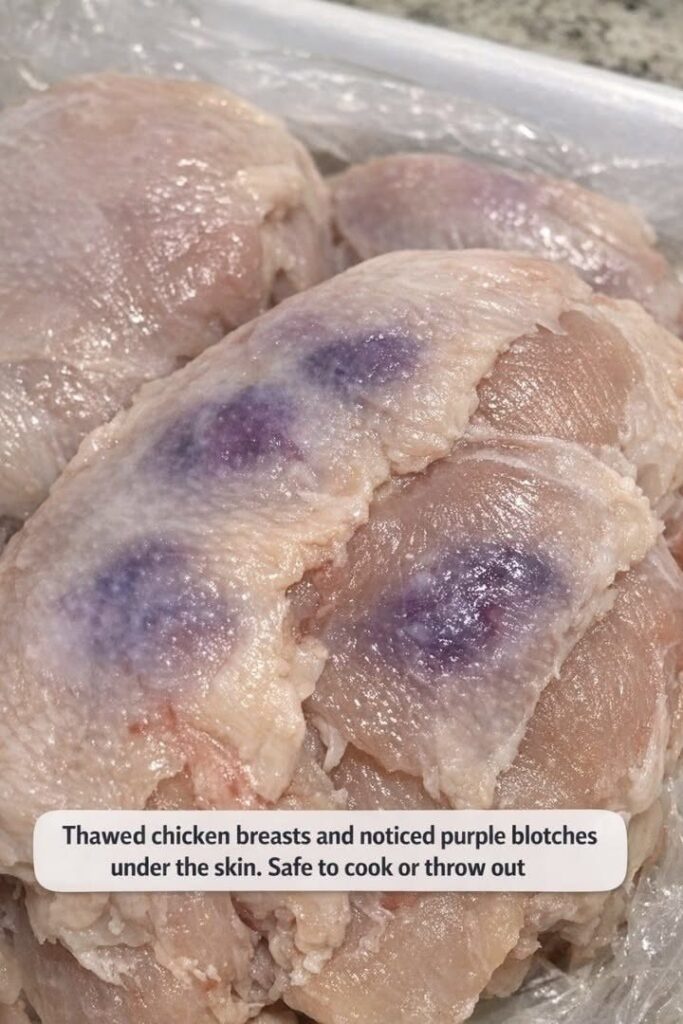
Noticed purple or dark spots on your raw chicken breast? Learn what causes this discoloration, when chicken is safe to eat, and the warning signs that indicate spoilage.
Purple Spots on Chicken Breasts: Should You Be Concerned?
You take a package of chicken breasts out of the refrigerator, preparing dinner as usual. Then you notice something unexpected—dark purple patches beneath the skin or on the surface of the meat.
Your first thought might be that the chicken has gone bad.
ADVERTISEMENT
Fortunately, that’s not always the case.
Purple, blue, or dark reddish discoloration on raw chicken is actually a fairly common occurrence. In many cases, these spots are harmless and simply the result of natural bruising or trapped blood beneath the skin.
Understanding the difference between harmless discoloration and genuine spoilage can help you avoid unnecessary food waste while keeping your family safe.
Why Does Raw Chicken Sometimes Have Purple Spots?
The most common reason for purple patches on chicken is bruising.
During processing, packaging, transportation, or handling, small blood vessels near the surface of the meat can rupture. This may cause small amounts of blood to collect beneath the skin, creating dark purple, blue, or reddish areas.
These spots often become more noticeable after freezing and thawing.
Common causes include:
- Minor bruising during handling
- Broken capillaries beneath the skin
- Natural blood pooling
- Freezing and thawing processes
- Variations in muscle tissue
In most cases, these color changes are cosmetic rather than a sign of spoilage.
Is Chicken with Purple Discoloration Safe to Eat?
See more on the next page to continue reading →
ADVERTISEMENT