Health Effects and Indoor Air Quality
ADVERTISEMENT
Filtration soiling itself is primarily a cleanliness and air quality issue rather than an immediate health hazard.
However, the particles involved may affect people who suffer from:
- Allergies
- Asthma
- Respiratory sensitivities
- Environmental sensitivities
Maintaining good indoor air quality can help reduce both carpet staining and airborne pollutants.
ADVERTISEMENT
Why Vacuuming Doesn’t Fully Remove the Stains
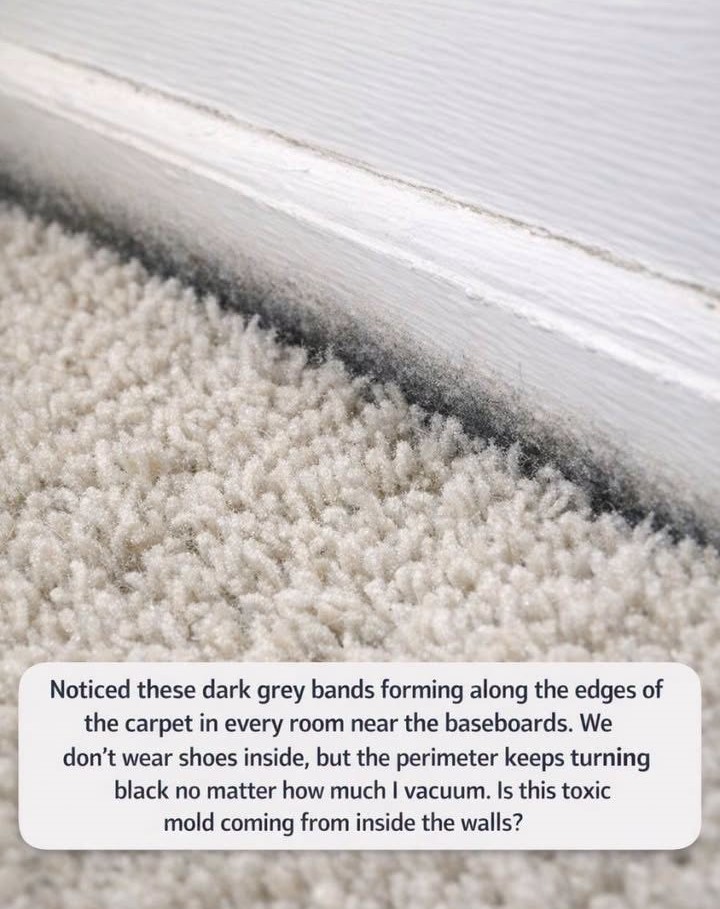
Many homeowners are surprised when routine vacuuming fails to eliminate the dark lines.
The reason is simple.
The particles responsible for filtration soiling are often extremely small and become deeply embedded within carpet fibers.
Standard vacuum cleaners may remove surface debris but often cannot extract the fine particles trapped at the base of the carpet.
As a result, the stains gradually darken over time.
Professional Carpet Cleaning Solutions
For severe filtration soiling, professional carpet cleaning is often the most effective option.
Popular cleaning methods include:
Hot Water Extraction
Often called steam cleaning, this process uses heated water and extraction equipment to remove deeply embedded particles.
Specialized Spot Treatments
Professional cleaners may use filtration-soiling-specific products designed to break down stubborn residue.
Deep Fiber Cleaning
Advanced equipment can reach contaminants that ordinary household vacuums leave behind.
Professional treatment often delivers the best results for long-standing stains.
Effective DIY Cleaning Methods
If the discoloration is mild, homeowners may achieve noticeable improvement using simple cleaning methods.
Baking Soda and Vinegar Method
- Sprinkle baking soda along the affected area.
- Lightly mist with vinegar.
- Allow the mixture to sit briefly.
- Gently scrub using a soft brush.
- Vacuum thoroughly after drying.
Carpet Cleaning Machines
A quality carpet cleaner equipped with a HEPA filtration system can help remove deeper contaminants.
Spot Cleaning Products
Use carpet-safe cleaning solutions specifically designed for heavy soil removal.
Always test cleaning products in a hidden area first.
How to Prevent Dark Carpet Lines
Preventing filtration soiling is often easier than removing it.
Seal Air Leaks
Inspect and seal gaps around:
- Baseboards
- Door frames
- Windows
- Floor penetrations
Reducing airflow helps minimize particle accumulation.
Upgrade Air Filters
High-quality HVAC filters capture more airborne contaminants before they settle in carpets.
Improve Ventilation
Proper airflow reduces particle concentration indoors.
Consider:
- Exhaust fans
- Air purifiers
- Regular HVAC maintenance
Reduce Indoor Pollutants
Limiting candle smoke, excessive dust, and indoor combustion sources can significantly reduce filtration soiling.
When to Call a Mold or Indoor Air Quality Specialist
Professional evaluation may be appropriate if you notice:
- Persistent moisture
- Water damage
- Strong odors
- Respiratory symptoms
- Rapid stain recurrence
Indoor air quality experts can identify underlying issues and recommend effective solutions.
Frequently Asked Questions
Are Dark Carpet Lines Dangerous?
In most cases, they are simply the result of filtration soiling and not a major health concern.
Can They Be Removed Completely?
Many stains can be significantly reduced or removed through professional cleaning, although severe cases may require multiple treatments.
Why Do They Return After Cleaning?
If the airflow issue remains unresolved, particles can continue accumulating over time.
Do New Homes Experience Filtration Soiling?
Yes. Both new and older homes can develop these stains if airflow patterns and airborne particles are present.
Final Thoughts
Dark lines along carpet edges may look alarming, but they are often the result of filtration soiling rather than poor housekeeping or serious contamination. Understanding how airflow, dust, and microscopic particles interact with carpet fibers can help homeowners address the problem effectively.
By combining proper cleaning techniques, improved air filtration, and preventative maintenance, you can keep your carpets looking cleaner, improve indoor air quality, and prevent those stubborn black lines from returning.
ADVERTISEMENT