ADVERTISEMENT
Discover why dark gray or black lines appear along carpet edges and baseboards. Learn about filtration soiling, indoor air quality, mold concerns, effective cleaning methods, and prevention strategies.
What Causes Dark Black Lines Along Carpet Edges?
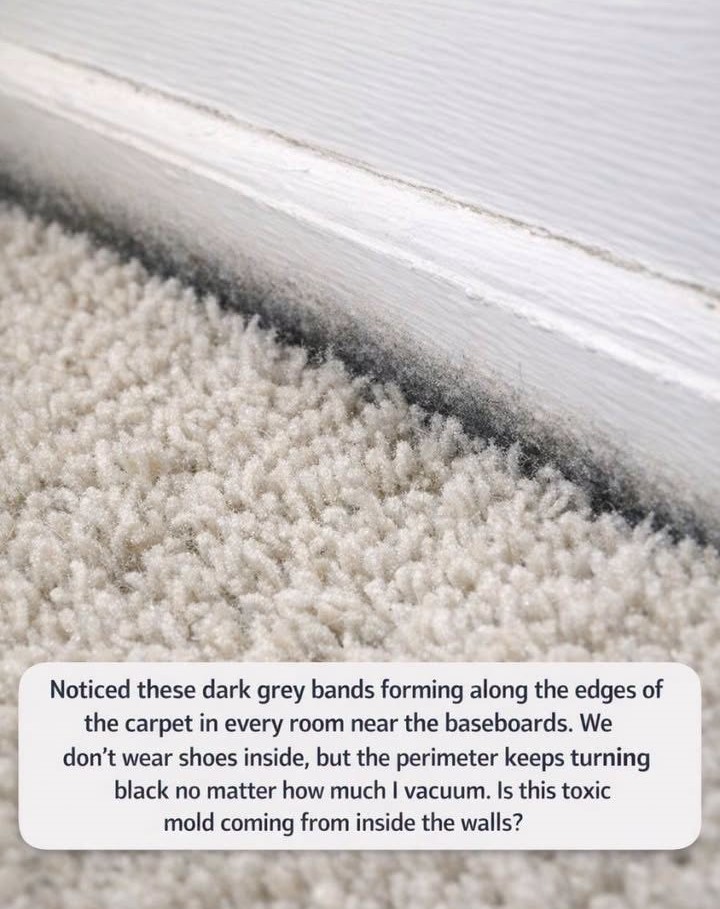
Have you noticed dark gray or black lines forming along the edges of your carpet, especially near baseboards, doorways, or under closed doors?
Many homeowners assume these mysterious stains are caused by dirt, mold, or poor housekeeping. In reality, even the cleanest homes can develop these unsightly marks.
ADVERTISEMENT
The good news is that in most cases, these dark lines are not a sign of serious contamination. Instead, they are often caused by a common phenomenon known as filtration soiling.
Understanding why these stains occur can help you remove them effectively and prevent them from returning.
What Is Filtration Soiling?
Filtration soiling occurs when air carrying tiny particles passes through carpet fibers near walls, baseboards, and other restricted airflow areas.
As the air moves through these narrow spaces, the carpet acts like a filter, trapping microscopic particles such as:
- Household dust
- Pet dander
- Pollen
- Soot
- Smoke residue
- Cooking particles
- Outdoor pollutants
Over time, these particles accumulate and create dark lines that become increasingly visible.
Why Do the Lines Appear Near Baseboards and Doorways?
One of the most common questions homeowners ask is why the stains appear in specific locations rather than across the entire carpet.
The answer lies in airflow.
Areas near:
- Baseboards
- Door frames
- Stair edges
- Floor vents
- Wall seams
often experience restricted air movement.
As air is pushed through these narrow gaps, particles become concentrated and trapped in the carpet fibers, gradually creating dark discoloration.
This is particularly common in homes with:
- Central heating systems
- Air conditioning systems
- Forced-air ventilation
- Poorly sealed wall gaps
Common Sources of the Particles
Many everyday household activities contribute to filtration soiling.
Indoor Sources
- Dust from clothing and fabrics
- Pet hair and dander
- Fireplace soot
- Candle smoke
- Cooking oils and grease particles
- Household cleaning product residues
Outdoor Sources
- Vehicle exhaust particles
- Construction dust
- Industrial pollutants
- Seasonal pollen
Although these particles are often invisible to the naked eye, they can accumulate significantly over time.
Could It Be Mold Instead?
In some cases, homeowners worry that black carpet lines indicate mold growth.
While mold is possible under certain conditions, filtration soiling is far more common.
Signs It May Be Filtration Soiling
- Uniform dark lines
- Located mainly along walls and edges
- No musty odor
- Dry carpet surface
Signs It May Be Mold
- Persistent musty smell
- Damp carpet or padding
- Water stains nearby
- Irregular dark patches
- Recent flooding or leaks
If moisture is present, further investigation may be necessary.
Health Effects and Indoor Air Quality
See more on the next page to continue reading →
ADVERTISEMENT