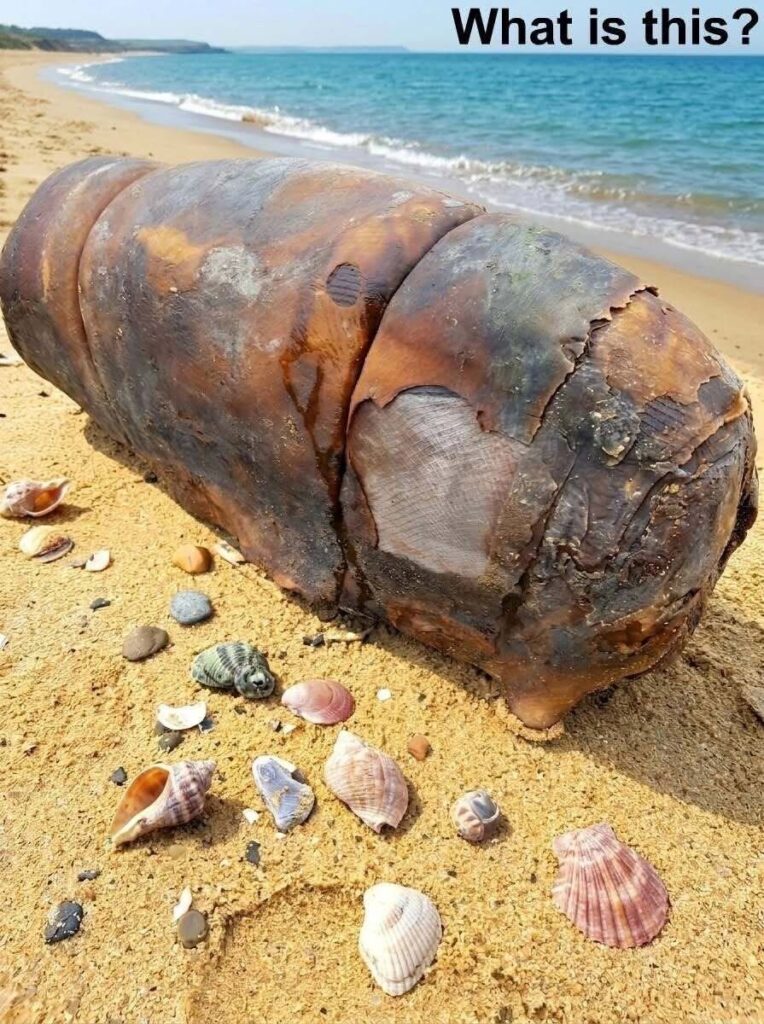
What This Discovery Reveals About Marine Pollution
ADVERTISEMENT
Although the object was not dangerous, the discovery highlighted an important environmental issue.
Many people assume discarded equipment simply disappears once it leaves sight. In reality, oceans often retain evidence of human activity for decades.
Around the world, coastlines regularly reveal:
ADVERTISEMENT
- Abandoned industrial materials
- Lost fishing gear
- Plastic waste
- Marine infrastructure components
- Weathered machinery parts
These items can remain hidden underwater for years before tides, storms, and shifting currents eventually return them to shore.
The ocean has a remarkable way of reminding us that waste rarely disappears completely.
The Psychology of Fear and Perception
Perhaps the most interesting part of this experience was not the cable itself.
It was the speed at which the mind created a story.
Within seconds, an ordinary piece of marine debris became something far more alarming. This reaction demonstrates a well-known psychological phenomenon: when information is incomplete, the brain often fills in the gaps using assumptions.
A shadow becomes a person.
A strange sound becomes an intruder.
An old cable becomes something far more dramatic.
Understanding this tendency helps us approach unfamiliar situations with greater curiosity and critical thinking.
Environmental Awareness Starts With Observation
Encounters like this remind us that beaches are more than recreational spaces.
They are living environments that tell stories about natural processes, human activity, and environmental change.
Objects washed ashore often reveal valuable insights about:
- Ocean currents
- Coastal erosion
- Marine ecosystems
- Waste management challenges
- Human impact on the environment
By paying closer attention to what we find along coastlines, we can better understand the connection between our daily activities and the health of our oceans.
Final Thoughts
What initially appeared to be a disturbing discovery turned out to be an old marine cable shaped by years of exposure to the elements.
The experience offered an unexpected lesson.
Not about danger, but about perception.
Not about fear, but about curiosity.
And not about mystery, but about the lasting impact human activity can have on the natural world.
The next time you walk along a beach, take a closer look at the objects that seem out of place. Sometimes the most ordinary discoveries reveal the most meaningful stories.
Frequently Asked Questions
Why do old marine cables look organic?
Years of erosion can expose woven internal fibers and insulation materials, creating textures that resemble muscle tissue or biological structures.
Is it common for industrial debris to wash ashore?
Yes. Ocean currents, storms, and coastal erosion frequently bring abandoned or damaged marine infrastructure back to beaches.
Can seawater dramatically change the appearance of objects?
Absolutely. Saltwater, sunlight, and wave action can transform man-made materials to the point where they become difficult to recognize.
What should you do if you find a suspicious object on a beach?
Maintain a safe distance, avoid touching it, and notify local authorities if the object appears hazardous or potentially dangerous.
ADVERTISEMENT