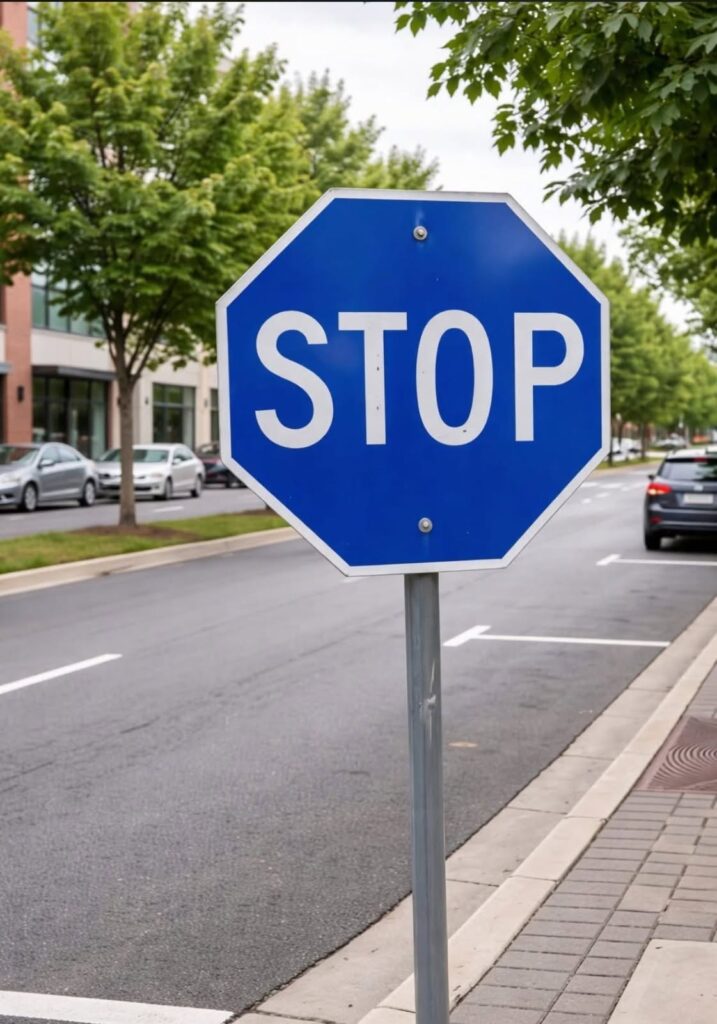
How Should Drivers Respond to a Blue Stop Sign?
ADVERTISEMENT
The safest and most responsible approach is simple:
1. Come to a Complete Stop
Treat the blue sign exactly as you would a standard stop sign.
2. Check Your Surroundings
Look carefully for:
ADVERTISEMENT
- Pedestrians
- Cyclists
- Other vehicles
- Property maintenance equipment
3. Proceed With Caution
Once the area is clear and safe, continue driving carefully.
Following these steps helps maintain safety for everyone sharing the roadway or parking area.
Why Are Some Stop Signs Blue Instead of Red?
There are several reasons private organizations may choose blue stop signs:
Visual Distinction
The different color helps distinguish private traffic control devices from government-issued road signs.
Branding and Property Design
Some campuses, resorts, and communities use blue signs to match their visual identity or property aesthetics.
Internal Traffic Management
Blue signs can serve as reminders to stop and proceed carefully without implying that the sign is part of the public traffic control system.
Can Blue Stop Signs Be Confusing?
Yes. Because drivers are trained to associate stop signs with the color red, blue stop signs can initially cause uncertainty.
This confusion is one reason transportation authorities require standardized red stop signs on public roads.
Consistency allows drivers to react quickly and appropriately, helping reduce accidents and improve traffic safety.
Other Unusual Traffic Sign Colors
While red stop signs are standard, other sign colors serve specific purposes:
- Yellow: Warnings and hazards
- Green: Directional guidance
- Blue: Services and informational signs
- Brown: Parks and recreational areas
- Orange: Construction and work zones
- White: Regulatory information
Each color helps communicate information quickly to drivers.
Frequently Asked Questions
Is a blue stop sign official?
Generally, no. Blue stop signs are typically installed on private property rather than public roadways.
Do I have to stop at a blue stop sign?
Yes. Even if it isn’t an official public traffic sign, stopping helps maintain safety and prevents potential conflicts with other vehicles or pedestrians.
Why aren’t public stop signs blue?
Transportation standards require stop signs to be red because the color is universally recognized and highly effective at capturing driver attention.
Can private properties create their own traffic signs?
Yes. Property owners often install custom signs to regulate traffic flow and improve safety within their facilities.
Final Thoughts
A blue stop sign may look unusual, but its purpose is straightforward: to encourage drivers to stop and proceed safely within private or controlled-access areas. While these signs typically don’t carry the same legal authority as official red stop signs on public roads, treating them with the same level of caution is always the smartest choice.
When in doubt, remember a simple rule: if a sign says “STOP,” it’s best to stop, look carefully, and continue only when it’s safe to do so.
ADVERTISEMENT