ADVERTISEMENT
Most drivers instantly recognize the classic red stop sign. Its bright color and familiar octagonal shape are universally associated with one simple instruction: stop.
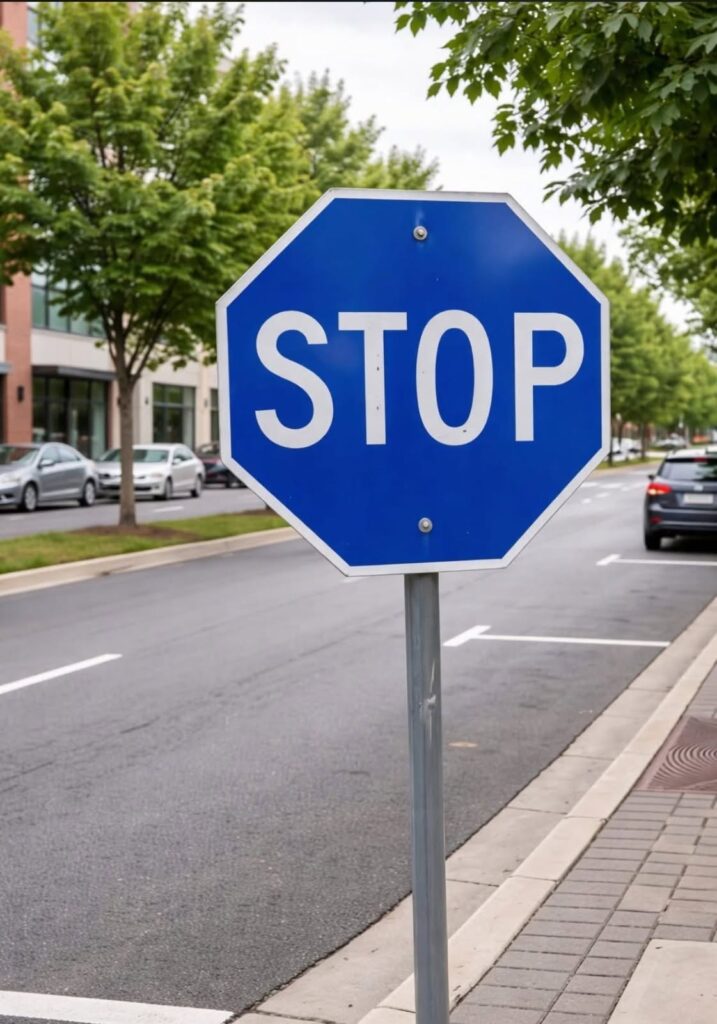
So when motorists encounter a blue stop sign, it’s only natural to wonder whether the rules are different—or if the sign even carries legal authority at all.
While blue stop signs are uncommon, they do serve a purpose. Understanding where they appear and how drivers should respond can help improve safety and avoid confusion behind the wheel.
ADVERTISEMENT
Why Standard Stop Signs Are Always Red
In the United States and many other countries, official traffic signs follow strict regulations designed to ensure consistency and road safety.
According to federal traffic control standards, official stop signs must feature:
- An octagonal shape
- A red background
- White lettering and border
The red color was chosen because it is highly visible and immediately signals caution, danger, or the need for an immediate response.
This uniform design helps drivers recognize stop signs instantly, regardless of location, weather conditions, or road type.
What Is a Blue Stop Sign?
A blue stop sign looks similar in shape and wording to a traditional stop sign but uses a blue background instead of red.
Unlike official roadway stop signs, blue stop signs are generally not used on public roads regulated by government transportation agencies.
Instead, they are commonly found in private or controlled-access locations.
Where Are Blue Stop Signs Usually Found?
You may encounter blue stop signs in places such as:
- Private residential communities
- Apartment complexes
- University campuses
- Industrial facilities
- Corporate business parks
- Military installations
- Private parking lots
- Resorts and recreational properties
Property owners often install these signs to improve traffic flow and encourage safe driving behavior within privately managed areas.
Are Blue Stop Signs Legally Enforceable?
In most cases, blue stop signs do not carry the same legal status as official red stop signs located on public roads.
However, that doesn’t mean drivers should ignore them.
Private property owners may establish traffic rules and safety requirements within their facilities. Failing to obey posted signs could still result in:
- Property violations
- Security enforcement actions
- Liability concerns in the event of an accident
- Increased risk to pedestrians and other drivers
How Should Drivers Respond to a Blue Stop Sign?
See more on the next page to continue reading →
ADVERTISEMENT