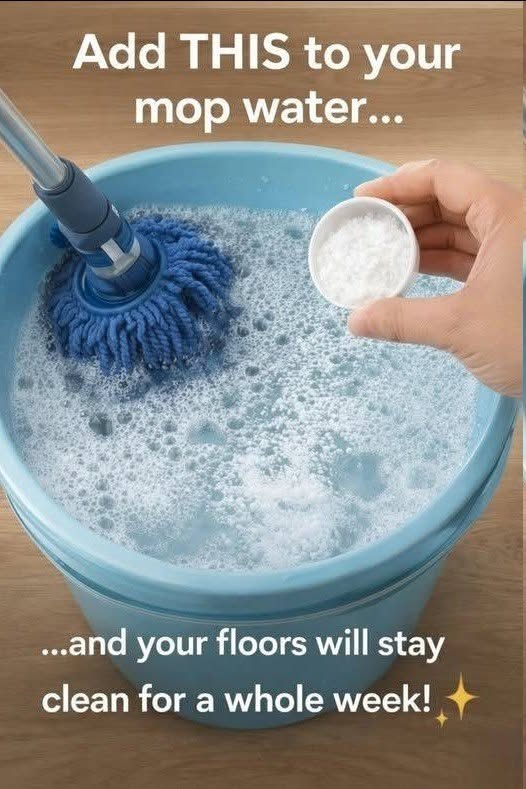
If your flooring is compatible with vinegar, a properly diluted solution can be an effective and affordable option.
Ingredients
- 1 gallon warm water
- ¼ cup white vinegar
- 1 tablespoon mild dish soap or castile soap (optional)
- 10 drops essential oil such as lavender, lemon, or tea tree (optional)
Why It Works
The vinegar helps break down grease and mineral buildup, while the soap lifts dirt from the surface.
The key is proper dilution.
Using concentrated vinegar may damage certain finishes over time, while a diluted solution offers cleaning benefits with much less risk.
For Delicate Floors
If you are cleaning sealed wood or laminate floors, consider reducing the vinegar to:
- 2 tablespoons per gallon of water
Alternatively, some homeowners prefer using:
- ½ cup rubbing alcohol
- 1 gallon water
This mixture often leaves a streak-free finish.
The Right Way to Mop Floors
Even the best cleaning solution won’t perform well if applied incorrectly.
Step 1: Remove Loose Dirt First
Always sweep, dust mop, or vacuum before mopping.
This prevents grit from scratching the floor during cleaning.
Step 2: Use a Damp Mop
Avoid soaking the floor.
Excess moisture is one of the leading causes of damage to laminate and wood flooring.
Step 3: Clean in Small Sections
Working gradually helps ensure dirt is removed rather than spread around.
Step 4: Allow Proper Drying
Open windows or use fans when possible to speed drying and reduce water spots.
The Real Secret to Cleaner Floors
Many viral cleaning posts overlook one simple fact:
Preventing dirt is often more effective than cleaning it.
Small daily habits can dramatically reduce how often floors need deep cleaning.
Leave Shoes at the Door
Outdoor shoes track in dirt, bacteria, and debris.
A shoe-free home can significantly reduce contaminants entering your living space.
Use Double Door Mats
Placing one mat outside and another inside helps capture dirt before it spreads throughout the house.
Protect High-Traffic Areas
Area rugs and runners help reduce wear and trap dust before it reaches your floors.
Clean Pet Paws
A quick wipe after outdoor walks can prevent mud and debris from spreading indoors.
Common Floor Cleaning Myths
Myth #1: Baking Soda and Vinegar Create a Powerful Cleaner
While the fizzing reaction looks impressive, it mostly produces carbon dioxide gas.
After the reaction ends, much of the cleaning power is reduced.
Myth #2: Homemade Cleaners Seal Floors
No simple vinegar solution creates a protective coating.
Only specialized sealants, finishes, or waxes can provide that type of protection.
Myth #3: Floors Stay Clean for a Week After One Mop
Dust settles continuously, and everyday foot traffic introduces new dirt.
No cleaner can stop this natural process.
Myth #4: Vinegar Disinfects Like Bleach
Vinegar can help reduce certain germs, but it is not a substitute for professional disinfectants in situations requiring thorough sanitation.
Extra Tips for a Better Shine
Remove Sticky Spots
Sprinkle a small amount of baking soda on stubborn residue, add a little water, gently scrub, and rinse.
Neutralize Pet Odors
Clean accidents immediately and follow with a diluted vinegar solution if appropriate for your flooring type.
Address Hard Water Marks
Apply vinegar to a cloth, wipe affected areas, and rinse thoroughly afterward.
Maintain Consistency
Regular light cleaning is often more effective than occasional deep cleaning.
Final Thoughts
The viral vinegar floor-cleaning hack isn’t a miracle solution, but it can be a practical and budget-friendly option when used correctly.
The real key to cleaner floors isn’t a secret ingredient. It’s a combination of proper cleaning techniques, preventive habits, and consistent maintenance.
A simple homemade cleaner can help remove dirt and grime, but long-lasting cleanliness comes from reducing the amount of dirt that enters your home in the first place.
When it comes to beautiful floors, consistency will always outperform shortcuts.