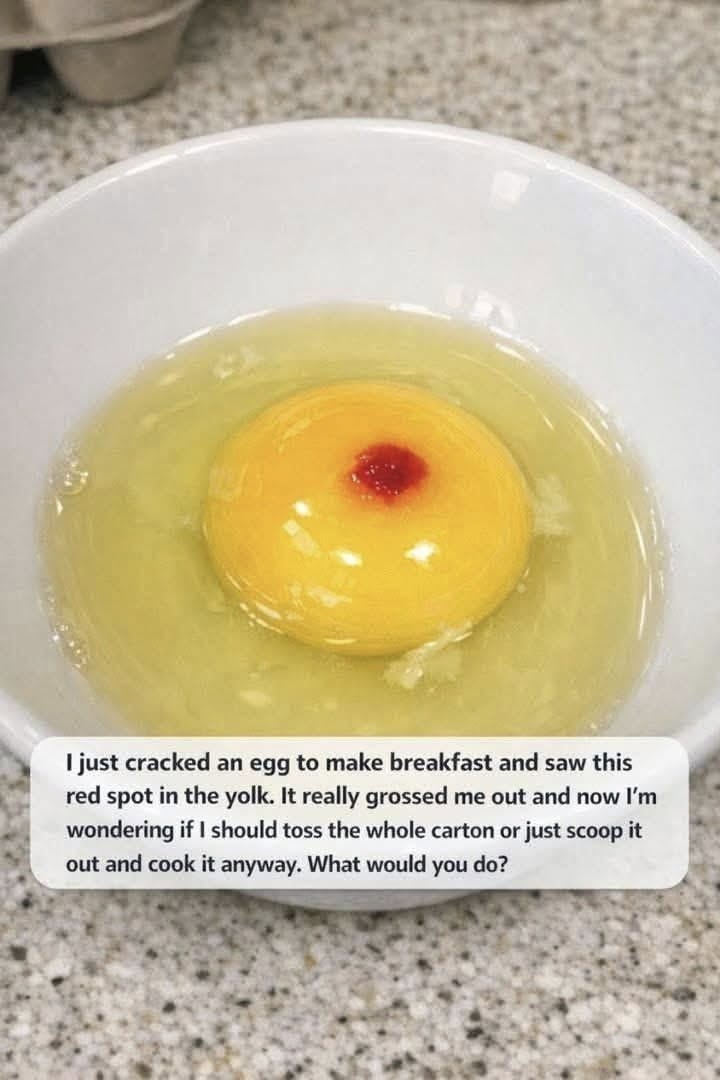
How to Remove a Blood Spot Safely
If the appearance bothers you, removing a blood spot is quick and easy.
Step 1
Use a clean spoon, knife tip, or fork.
Step 2
Carefully lift out the spot without disturbing the rest of the yolk.
Step 3
Discard the removed material and continue using the egg as normal.
Always wash your hands and utensils afterward to maintain proper kitchen hygiene.
Does One Odd Egg Mean the Whole Carton Is Bad?
Not at all.
Finding a blood spot in one egg does not affect the quality or safety of the remaining eggs in the carton.
However, if multiple eggs show unusual odors, discoloration, or other signs of spoilage, it may be worth contacting the retailer or manufacturer.
How Common Are Blood Spots?
Blood spots are relatively uncommon but not rare.
Studies estimate that visible blood spots occur in fewer than 1% of commercially sold eggs due to extensive quality control and candling procedures.
This means most consumers may only encounter them occasionally.
How to Check Eggs Before Using Them
While you can’t always detect a blood spot before cracking an egg, there are ways to assess overall egg quality.
The Float Test
Place the egg in a bowl of water:
- Sinks and lies flat = very fresh
- Stands upright = older but often still usable
- Floats = likely spoiled and should be discarded
Visual Inspection
Check for:
- Cracked shells
- Leaking contents
- Unusual shell discoloration
Candling
Holding an egg in front of a bright light can reveal certain internal defects, although blood spots may not always be visible.
What Blood Spots Say About Egg Quality
Contrary to popular belief, blood spots are not indicators of poor-quality eggs.
They generally do not affect:
- Freshness
- Nutrition
- Taste
- Cooking performance
Most often, they simply reflect a natural variation during the egg production process.
Smart Egg Storage and Food Safety Tips
To keep eggs fresh and safe:
- Store eggs in the refrigerator at 40°F (4°C) or below.
- Keep eggs in their original carton.
- Avoid storing eggs in the refrigerator door where temperatures fluctuate.
- Use eggs within three weeks of purchase for best quality.
- Wash hands after handling raw eggs.
- Cook eggs thoroughly when appropriate.
Frequently Asked Questions
Does a blood spot mean the egg is fertilized?
No. Blood spots are unrelated to fertilization and occur naturally during egg formation.
Can children eat eggs with blood spots?
Yes, provided the egg is otherwise fresh and properly cooked.
Do blood spots affect the taste of eggs?
Most people notice no difference in taste or texture.
Are blood spots more common in brown eggs?
Yes, they are often reported more frequently in brown eggs, though they can occur in any egg.
Final Thoughts
Finding a red spot in an egg yolk may look unusual, but in most cases, it is completely harmless. Blood spots are a natural part of the egg formation process and do not indicate contamination or poor quality.
By understanding the difference between a harmless blood spot and genuine signs of spoilage, you can reduce food waste, improve kitchen confidence, and make safer decisions when preparing meals. When an egg smells fresh, looks normal, and shows no signs of contamination, a small red spot is usually nothing to worry about.