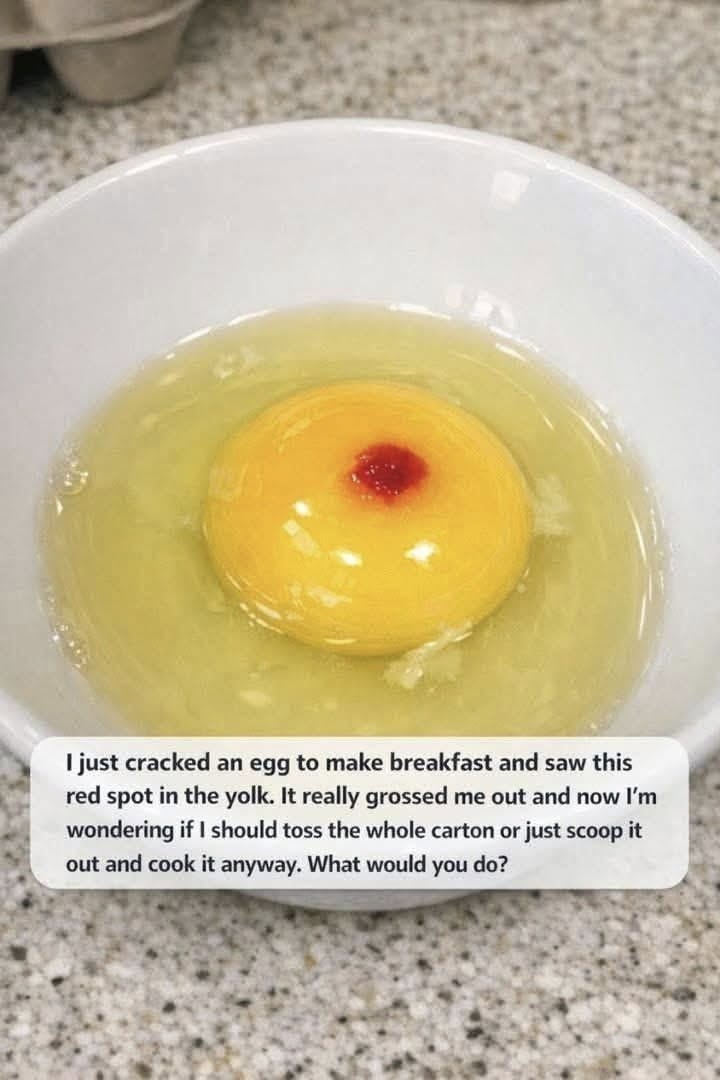
Cracking open an egg should be simple, but occasionally you may discover something unexpected—a small red spot in the yolk. For many people, this can be alarming and may lead to concerns about food safety, egg quality, or potential contamination.
Fortunately, a red spot in an egg is usually harmless. Understanding what causes these spots and knowing when an egg is safe to eat can help you avoid unnecessary food waste while protecting your family’s health.
What Is the Red Spot in an Egg Yolk?
The small red or brownish spot sometimes found in an egg yolk is known as a blood spot. It occurs when a tiny blood vessel ruptures during the egg formation process inside the hen.
In some cases, the spot may appear slightly darker and is referred to as a meat spot, which consists of a small piece of tissue rather than blood. Both are natural occurrences and generally do not indicate a problem with the egg.
Modern egg-processing facilities use a technique called candling to identify and remove most eggs containing visible blood spots. However, a few may still make it to grocery store shelves.
Are Blood Spots in Eggs Safe to Eat?
Yes. According to food safety experts, blood spots do not make an egg unsafe to consume.
A blood spot:
- Does not mean the egg is fertilized
- Does not indicate bacterial contamination
- Does not affect nutritional value
- Does not significantly alter taste or texture
Many people simply remove the spot with a spoon or knife and continue cooking as usual.
Why Do Blood Spots Occur?
Blood spots are completely natural and can happen for several reasons, including:
- Minor ruptures of blood vessels during egg formation
- The age of the hen
- Certain egg-laying breeds
- Natural biological variations
They are slightly more common in eggs from older hens and may appear more frequently in brown eggs.
When Should You Throw an Egg Away?
While blood spots are harmless, other signs can indicate that an egg is no longer safe to eat.
Discard the egg if you notice:
A Strong or Unpleasant Odor
Fresh eggs have little to no smell. A sulfur-like or rotten odor is a clear warning sign.
Unusual Discoloration
Green, pink, black, or iridescent colors may indicate spoilage or contamination.
Watery Egg Whites
Very thin, watery whites can be a sign that an egg is aging, though not always unsafe. Combined with other warning signs, it may be best to discard it.
Mold or Visible Contamination
Any evidence of mold or foreign growth means the egg should not be consumed.
What Would Most People Do?
Many experienced home cooks don’t think twice about using an egg with a small blood spot.
A common approach is:
- Crack the egg into a separate bowl.
- Remove the blood spot if desired.
- Inspect the rest of the egg.
- Proceed with cooking if everything else appears normal.
This simple habit also helps prevent a bad egg from ruining an entire recipe.
How to Remove a Blood Spot Safely