Better Option
Always lift cookware when moving it from one burner to another.
4. Allowing Food Spills to Burn Onto the Surface
Food spills can quickly become difficult to remove if left unattended.
Sugary substances, sauces, and grease can bake onto the surface, potentially causing staining or damage.
Better Option
Clean spills as soon as the cooktop has cooled sufficiently and follow manufacturer cleaning recommendations.
5. Cooking With Dirty Cookware
Many homeowners overlook the condition of the bottom of their pots and pans.
Grease, food residue, and burnt-on debris can transfer directly onto the cooktop, creating stains and increasing the risk of scratches.
Better Option
Inspect and clean cookware bottoms regularly before placing them on the stove.
6. Placing a Hot Lid Face Down on the Glass
This is one of the most overlooked yet potentially damaging habits.
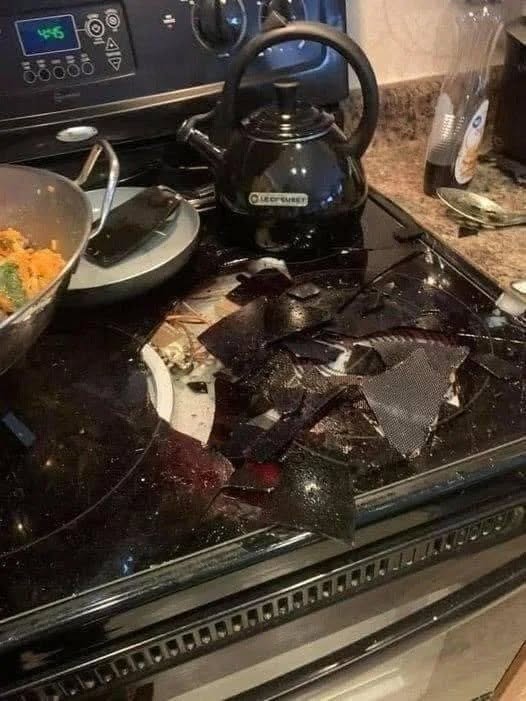
When a hot lid is placed face down on a cool glass cooktop, it can create a vacuum seal and sudden temperature change. This thermal stress may increase the risk of cracking or shattering the glass surface.
Better Option
Place hot lids on a heat-resistant trivet, cooling rack, or countertop designed to withstand high temperatures.
7. Ignoring Small Cracks or Chips
A tiny chip may seem harmless, but even minor damage can worsen over time.
Heat expansion, repeated use, and temperature fluctuations can cause small cracks to spread, increasing the risk of complete cooktop failure.
Better Option
If you notice any crack, chip, or unusual damage, contact a qualified appliance repair technician immediately.
8. Using Cookware With Rough Bottoms
Cookware with rough, warped, or uneven bottoms can scratch the glass surface and create uneven heating.
Damaged cookware may also reduce cooking efficiency and place unnecessary stress on the cooktop.
Better Option
Use smooth-bottomed cookware specifically recommended for glass or ceramic cooktops.
9. Dropping Objects on the Cooktop
Glass cooktops are particularly vulnerable to impact damage.
Dropping heavy utensils, spice jars, cookware, or other kitchen items can cause cracks or even shatter the surface.
Better Option
Handle cookware carefully and avoid storing heavy objects above the cooktop where they could accidentally fall.
How to Keep Your Glass Cooktop Looking New
Proper maintenance can significantly extend the life of your stove.
Follow these simple tips:
- Clean spills promptly.
- Use non-abrasive cleaning products.
- Lift cookware instead of sliding it.
- Avoid sudden temperature changes.
- Inspect cookware regularly.
- Address cracks or chips immediately.
- Use cookware approved for glass cooktops.
Frequently Asked Questions
Can cast iron be used on a glass cooktop?
Some manufacturers allow cast iron cookware, but it should be used carefully. Rough or heavy cast iron can scratch or crack the surface if handled improperly.
What causes a glass cooktop to crack?
Common causes include impact damage, thermal shock, heavy cookware, manufacturing defects, and existing chips or cracks that worsen over time.
Are glass cooktops durable?
Yes. Modern glass cooktops are designed to withstand daily cooking, but they require proper care to prevent damage.
What is the best cleaner for a glass cooktop?
A cooktop cleaner specifically formulated for glass or ceramic surfaces is generally the safest option.
Final Thoughts
Glass cooktops add elegance and functionality to modern kitchens, but they require careful handling to stay in top condition. By avoiding these common mistakes and following proper maintenance practices, you can protect your appliance, reduce repair costs, and keep your kitchen looking beautiful for years to come.