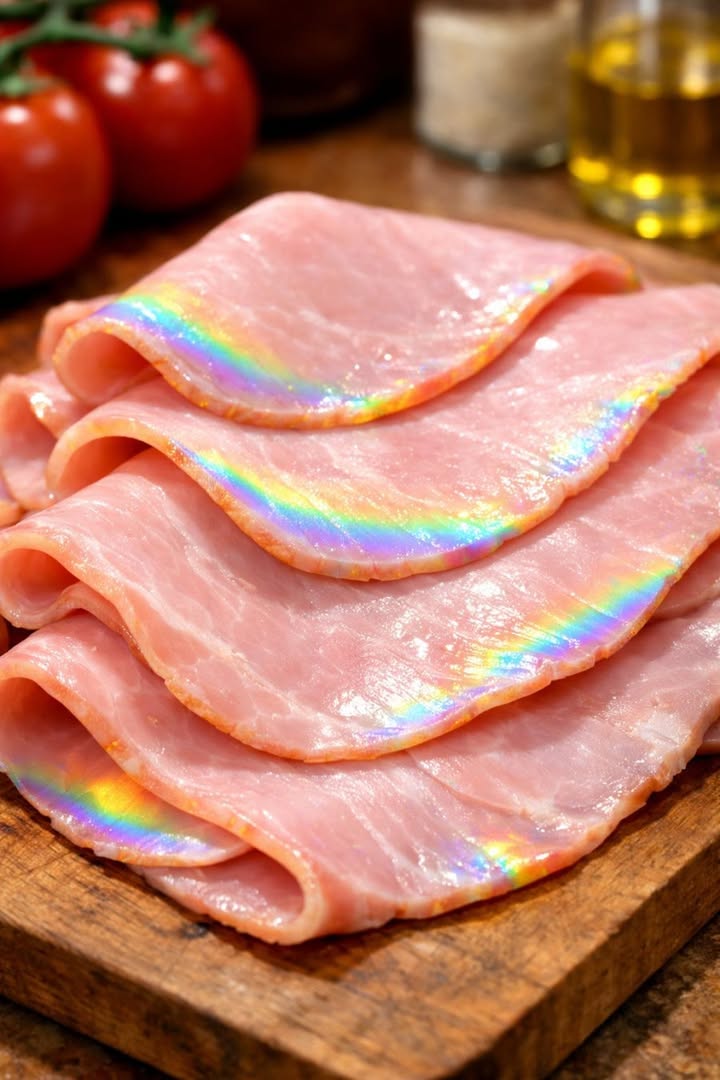
Have you ever opened a package of deli ham and noticed a strange rainbow-like shimmer across the surface?
At first glance, it can look alarming. Many people immediately wonder whether the ham has spoiled, been contaminated, or is no longer safe to eat.
The good news is that in most cases, that colorful shine is completely normal.
In fact, the rainbow effect seen on sliced deli meats is a natural scientific phenomenon known as iridescence, and it often has nothing to do with freshness or food safety.
Before you throw away perfectly good ham, here’s what you need to know about why it happens, how to identify real signs of spoilage, and when it’s time to toss the meat.
What Causes the Rainbow Shine on Deli Ham?
The colorful sheen that appears on ham is called iridescence.
Iridescence occurs when light reflects and bends off the microscopic structure of the meat’s muscle fibers. As light hits the surface at different angles, it separates into multiple colors, creating a rainbow-like appearance.
The same effect can be seen on:
- Soap bubbles
- Peacock feathers
- Butterfly wings
- Compact discs (CDs)
- Oil on water
In deli meat, the effect is simply a result of the way light interacts with the meat’s natural structure.
The Bottom Line
A rainbow sheen alone does not mean the ham is spoiled.
The Science Behind Iridescent Meat
Deli ham contains tightly packed muscle fibers.
When these fibers are sliced thinly and evenly, they can act similarly to tiny prisms that scatter light.
This process creates:
- Green hues
- Blue tones
- Purple reflections
- Rainbow-like colors
The thinner and smoother the slice, the more noticeable the effect becomes.
That’s why freshly sliced deli meats often display this shimmering appearance more than thicker cuts.
When a Rainbow Sheen Is Completely Normal
In most cases, an iridescent surface is a sign of nothing more than proper slicing and normal meat structure.
The ham is generally safe to eat if:
✅ It smells fresh
✅ The texture feels normal
✅ The package is within its use-by date
✅ There are no signs of mold
✅ It has been refrigerated properly
If those conditions are met, the colorful shine is usually harmless.
Warning Signs That Ham Has Gone Bad
While the rainbow effect is normal, there are several genuine spoilage indicators you should never ignore.
Discoloration
Discard ham if you notice:
- Green patches
- Gray coloring
- Brown areas
- Dark spots
These changes may indicate bacterial growth or deterioration.
Mold Growth
Visible mold is a clear sign that the meat should be discarded immediately.
Mold may appear as:
- Fuzzy spots
- White patches
- Green growth
- Black specks
Excessive Surface Slime
A sticky or slimy coating often signals bacterial activity and spoilage.
Always Use the Smell Test
One of the most reliable freshness indicators is smell.
Fresh deli ham should have:
- A mild aroma
- Slightly salty scent
- Clean, fresh smell
Discard the ham if it smells:
- Sour
- Rotten
- Ammonia-like
- Unpleasant or strong
When it comes to food safety, your nose is often your best guide.
Check the Texture Before Eating
Fresh deli ham should feel:
- Slightly moist
- Smooth
- Firm
Spoiled ham often feels:
- Sticky
- Slimy
- Excessively wet
If the texture seems unusual, it’s safest to throw it away.
Why Some Ham Shines More Than Others
Not all deli meats display iridescence equally.
Several factors can increase the rainbow effect:
Thin Slicing
Thin slices create smoother surfaces that reflect light more effectively.
Curing Process
Cured meats often have structural changes that enhance light reflection.
Moisture Content
Higher moisture levels can intensify the shimmering appearance.
Processing Methods
Commercial slicing equipment produces very smooth cuts, making iridescence more visible.
How Storage Affects Deli Ham Freshness
Even perfectly fresh ham can spoil quickly if stored improperly.
Best Storage Practices
- Refrigerate immediately after purchase
- Keep below 40°F (4°C)
- Store in airtight containers
- Minimize exposure to air
- Avoid leaving meat at room temperature
Proper storage dramatically reduces bacterial growth and extends freshness.
How Long Does Deli Ham Last?
General guidelines for opened deli ham:
Freshly Sliced Deli Ham
- Best within 3–5 days
Packaged Deli Ham
- Follow manufacturer recommendations
- Usually 3–5 days after opening
Always check packaging instructions for specific storage recommendations.
When You Should Throw It Away
Discard the ham if you notice any of the following:
❌ Sour or unpleasant smell
❌ Slimy texture
❌ Mold growth
❌ Green, gray, or brown discoloration
❌ Expired and improperly stored
When in doubt, food safety experts recommend throwing it out rather than risking foodborne illness.
Expert Tips for Buying Deli Ham
To maximize freshness:
Buy From Reputable Sources
Choose stores with high product turnover and proper refrigeration.
Inspect Before Purchasing
Look for:
- Fresh color
- No visible moisture buildup
- Proper packaging
- Current expiration dates
Buy Smaller Quantities
Purchasing only what you’ll use within a few days helps reduce waste and improves freshness.
What If the Rainbow Shine Still Bothers You?
Even though iridescence is harmless, some people find it visually unappealing.
If that’s the case, consider:
- Buying thicker slices
- Choosing freshly roasted meats
- Using the ham in cooked recipes
- Dicing it into casseroles, soups, or omelets
Cooking won’t eliminate the rainbow effect entirely, but it often makes it less noticeable.
Frequently Asked Questions
Is rainbow-colored ham safe to eat?
Yes. In most cases, the rainbow sheen is a natural optical effect and not a sign of spoilage.
Why does deli turkey sometimes look rainbow-colored too?
The same light-reflection phenomenon occurs in turkey, roast beef, chicken, and other sliced meats.
Does iridescence affect flavor?
No. The appearance has no impact on taste, texture, or nutritional value.
Can spoiled ham also have a rainbow shine?
Yes. That’s why you should always rely on smell, texture, storage history, and expiration dates—not appearance alone.
Final Thoughts
A rainbow sheen on deli ham may look unusual, but it’s typically a harmless result of light interacting with the meat’s natural structure. Understanding the difference between normal iridescence and true spoilage signs can help you avoid unnecessary food waste while keeping your family safe.
When evaluating deli meat, remember the golden rule: trust your eyes, your nose, and your sense of touch. If the ham smells fresh, feels normal, and has been stored properly, that colorful shimmer is usually nothing more than science at work.