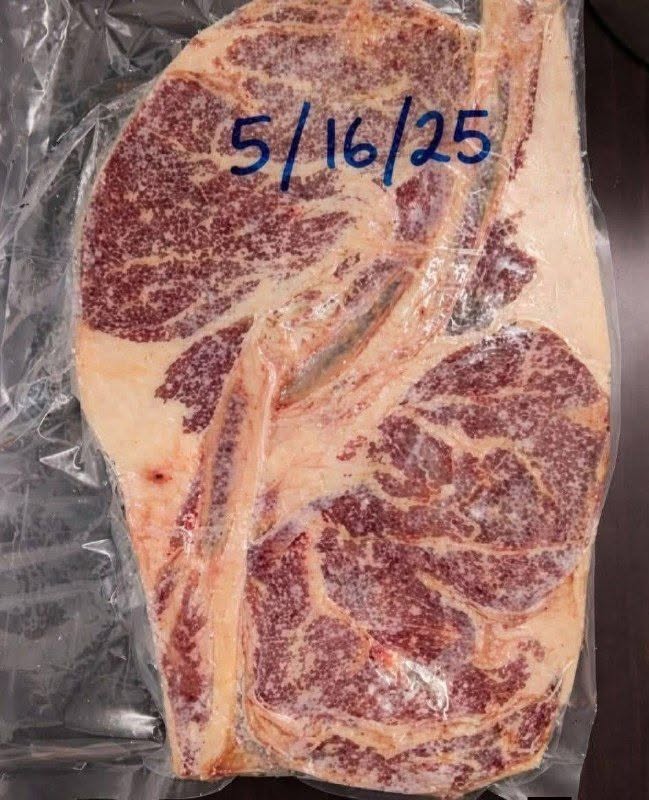
Step 1: Prepare the Steak Properly
Bring to Room Temperature
ADVERTISEMENT
Remove the steak from the refrigerator 45–60 minutes before cooking.
This helps promote more even cooking throughout the meat.
Pat the Surface Dry
Moisture is the enemy of a good crust.
ADVERTISEMENT
Use paper towels to thoroughly dry both sides of the steak before seasoning.
Season Generously
Apply:
- Kosher salt
- Fresh black pepper
Thick steaks require proper seasoning to bring out their full flavor.
Bonus Tip: Dry Brine
For even better results:
- Salt the steak 4–24 hours in advance
- Place it uncovered in the refrigerator
This process helps improve flavor, tenderness, and crust development.
Method 1: Pan-Seared and Oven-Finished Ribeye
This method is commonly used in high-end steakhouses.
Step 1: Create the Crust
Preheat your oven to:
400°F (200°C)
Heat a cast-iron skillet over high heat for several minutes.
Add oil.
Place the steak into the skillet and leave it untouched for 3–4 minutes.
This allows a deep golden-brown crust to develop.
Step 2: Flip and Baste
Flip the steak.
Add:
- Butter
- Garlic
- Fresh herbs
Tilt the skillet slightly and continuously spoon the melted butter over the steak for 1–2 minutes.
This technique adds tremendous flavor and aroma.
Step 3: Finish in the Oven
Transfer the skillet directly into the oven.
Cook until the desired internal temperature is reached.
Steak Temperature Guide
| Doneness | Internal Temperature |
|---|---|
| Rare | 120–125°F (50–52°C) |
| Medium Rare | 130–135°F (54–57°C) |
| Medium | 140–145°F (60–63°C) |
| Medium Well | 150°F (65°C) |
| Well Done | 160°F+ (70°C+) |
Recommended
Most chefs consider medium-rare the ideal doneness for ribeye because it preserves maximum tenderness and juiciness.
Don’t Skip the Resting Period
After cooking, transfer the steak to a cutting board.
Allow it to rest for:
10 minutes
Resting helps the juices redistribute throughout the meat.
Cutting immediately can result in unnecessary moisture loss.
Alternative Method: Charcoal Grilling
If you love smoky flavor, grilling is an outstanding option.
Direct Heat Sear
Preheat grill to:
450–500°F (230–260°C)
Cook over direct heat for approximately 4–5 minutes per side.
Indirect Finish
Move the steak to indirect heat.
Close the lid and continue cooking until your desired internal temperature is reached.
The natural smokiness from charcoal complements ribeye exceptionally well.
The Secret Behind the Perfect Crust
The rich brown crust develops through a process called the Maillard Reaction.
This occurs when proteins and sugars react at high temperatures, creating hundreds of complex flavor compounds.
To maximize crust formation:
- Dry the steak thoroughly
- Use high heat
- Avoid overcrowding the pan
- Don’t move the steak excessively
Common Mistakes to Avoid
Cooking Straight from the Refrigerator
Cold meat cooks less evenly.
Using Low Heat
Low temperatures prevent proper browning.
Constantly Flipping the Steak
Frequent movement interrupts crust formation.
Skipping the Resting Time
This can lead to a drier steak.
Overcooking
Ribeye is at its best when some pink remains in the center.
Best Side Dishes for Ribeye Steak
Because ribeye is rich and flavorful, lighter sides help create balance.
Excellent options include:
- Garlic mashed potatoes
- Roasted asparagus
- Grilled zucchini
- Creamed spinach
- Crispy roasted potatoes
- Arugula salad
- Roasted Brussels sprouts
Delicious Sauces and Toppings
A great ribeye doesn’t require sauce, but these pair beautifully:
Garlic Herb Butter
Classic and simple.
Chimichurri
Fresh herbs add brightness and contrast.
Peppercorn Cream Sauce
A steakhouse favorite.
Blue Cheese Butter
Rich, creamy, and flavorful.
Red Wine Reduction
Elegant and perfect for special occasions.
Frequently Asked Questions
Is bone-in ribeye better than boneless?
Both are excellent. Bone-in ribeye offers a dramatic presentation and may help retain moisture during cooking.
How thick should a ribeye steak be?
For best results, choose steaks that are at least 2 inches thick.
Can I reverse sear a ribeye?
Absolutely. Reverse searing is a popular technique that creates exceptional edge-to-edge doneness.
Why is ribeye so tender?
The rib section performs minimal work, resulting in less connective tissue and naturally tender meat.
Final Thoughts
The bone-in ribeye has earned its reputation as one of the finest steaks available. Its rich marbling, incredible tenderness, and bold flavor make it a favorite among chefs and steak enthusiasts alike.
With proper preparation, high heat, and a little patience, you can achieve a beautifully seared crust, a juicy center, and true steakhouse-quality results without ever leaving home.
Master this technique once, and you’ll have a restaurant-worthy steak recipe you’ll return to again and again.
ADVERTISEMENT