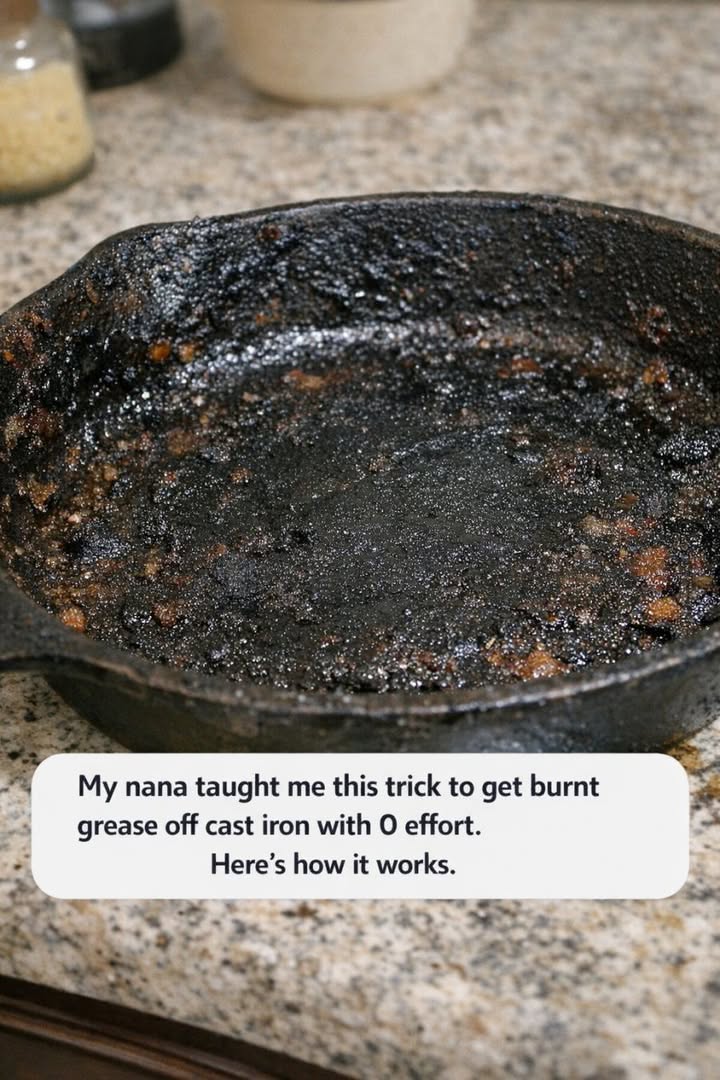
Step 1: Prepare the Skillet
Start with a dry cast iron skillet.
Sprinkle a generous layer of salt over areas where grease has accumulated.
For a standard skillet:
- Approximately ¼ cup of salt works well
Make sure the salt covers the affected areas evenly.
Allow it to sit for several minutes before moving to the next step.
Step 2: Use Heat to Loosen the Residue
Place the skillet on the stove over medium heat.
Allow the pan to warm gradually.
As the skillet heats:
- Grease softens
- Residue loosens
- Salt begins to absorb oils
Heat the skillet for approximately 10–15 minutes.
Carefully monitor the pan and avoid overheating.
Step 3: Wipe Away the Grease
Allow the skillet to cool slightly until it can be handled safely.
Using:
- A paper towel
- A soft cloth
- A non-abrasive kitchen towel
Gently wipe the salt across the surface.
The loosened grease should lift away with surprisingly little effort.
For stubborn spots, use a wooden spatula or non-metal scraper to gently remove any remaining residue.
Why This Method Works
The effectiveness of this cleaning technique comes down to basic kitchen science.
Salt Acts as a Mild Abrasive
Salt particles help loosen cooked-on residue without aggressively scraping the pan.
Heat Softens Grease
Warm temperatures cause hardened oils to soften, making them easier to remove.
Minimal Damage to Seasoning
Unlike harsh cleaners or steel wool, salt is less likely to strip away the protective seasoning layer that makes cast iron perform so well.
How to Protect Your Cast Iron Seasoning
The seasoning on cast iron is a layer of polymerized oil that creates a naturally non-stick surface.
To preserve it:
- Avoid soaking the pan for long periods
- Skip harsh chemical cleaners
- Avoid excessive scrubbing
- Dry immediately after cleaning
- Apply a thin layer of oil after use
Proper seasoning helps improve cooking performance and protects against rust.
Common Cast Iron Cleaning Mistakes
Using Steel Wool Excessively
Aggressive scrubbing can remove seasoning and expose bare metal.
Leaving Water in the Pan
Moisture is one of the leading causes of rust.
Using Too Much Soap
While small amounts of modern dish soap are generally safe, excessive use can weaken seasoning over time.
Skipping Re-Seasoning
After deep cleaning, adding a light coating of oil helps maintain protection.
When the Salt Method Isn’t Enough
Some skillets develop extremely heavy carbon buildup after years of neglect.
In these situations, you may need a deeper cleaning approach.
Baking Soda Paste
Mix:
- Baking soda
- Water
into a thick paste.
Apply it to problem areas and gently scrub with a soft brush.
This can help remove stubborn residue while minimizing damage to the skillet.
How to Keep Your Cast Iron Nearly Self-Cleaning
Preventing grease buildup is easier than removing it.
Best Practices
✔ Wipe out food residue after cooking
✔ Dry immediately after washing
✔ Apply a thin layer of oil after use
✔ Avoid storing food in cast iron
✔ Re-season periodically
✔ Address grease buildup early
Regular maintenance can dramatically reduce the need for deep cleaning.
Frequently Asked Questions
Can I use salt to clean cast iron?
Yes. Salt is commonly used as a gentle abrasive to remove grease and food residue.
Does salt damage cast iron seasoning?
When used properly, salt is generally much gentler than steel wool or harsh scrubbing tools.
Can I use kosher salt instead of table salt?
Yes. Kosher salt works well and is often preferred because of its larger crystals.
Should I wash cast iron after using salt?
A quick wipe or rinse followed by thorough drying is usually sufficient.
What’s the biggest mistake people make with cast iron?
Leaving moisture in the pan after cleaning, which can lead to rust formation.
Final Thoughts
Keeping cast iron cookware clean doesn’t have to involve endless scrubbing or harsh chemicals. With nothing more than salt, gentle heat, and a few minutes of your time, you can remove burnt grease while preserving the seasoning that makes cast iron so valuable.
This simple kitchen trick has been passed down through generations because it works. When combined with regular maintenance and proper seasoning, it can help keep your cast iron skillet performing beautifully for years to come.