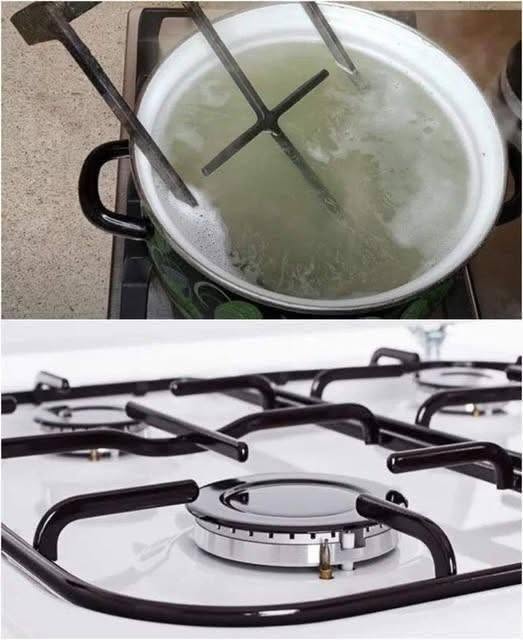
Step-by-Step Guide to Cleaning Stove Grates
Step 1: Remove the Grates
Carefully remove the stove grates from your cooktop.
Shake off loose debris and wipe away excess grease with a paper towel.
Step 2: Create a Cleaning Paste
In a small bowl, combine:
- ½ cup baking soda
- Enough water or white vinegar to form a thick paste
Mix until smooth.
The baking soda helps loosen carbon deposits while providing gentle scrubbing power.
Step 3: Coat the Grates
Spread the paste generously over the entire surface of each grate.
Pay special attention to:
- Burnt areas
- Greasy spots
- Heavy carbon buildup
Allow the paste to sit for at least 1 to 2 hours.
For extremely dirty grates, letting it sit longer may improve results.
Step 4: Use the Deep-Clean Method for Severe Buildup
For heavily carbonized stove grates:
- Place the grate inside a large heavy-duty garbage bag.
- Add a small container or cup with household ammonia inside the bag (do not pour directly onto the grate).
- Seal the bag tightly.
- Leave it outdoors or in a well-ventilated area overnight.
The ammonia fumes help loosen stubborn grease and carbon deposits.
Safety Note: Never mix ammonia with bleach or other cleaning chemicals.
Step 5: Scrub Away the Residue
After soaking:
- Use a sponge, scrub brush, or scouring pad to remove loosened grime.
- For particularly stubborn spots, use steel wool if compatible with your grate material.
Most of the buildup should come off with significantly less effort.
Step 6: Rinse Thoroughly
Rinse the grates with hot water to remove all remaining residue.
Inspect the surface and repeat the process if necessary for heavily soiled areas.
Step 7: Dry Completely
Use a clean towel to dry the grates thoroughly.
Allow them to air-dry completely before placing them back on the stove.
Proper drying helps prevent rust and corrosion.
Extra Tips for Keeping Stove Grates Clean
Clean Small Spills Immediately
Removing spills before they harden prevents difficult carbon buildup later.
Perform Monthly Deep Cleaning
A monthly cleaning routine can dramatically reduce stubborn grease accumulation.
Use Protective Burner Covers
Burner covers can help catch splatters and make cleanup easier.
Wipe Down After Cooking
A quick wipe after the stove cools can prevent grease from baking onto surfaces.
Frequently Asked Questions
Can I soak stove grates in vinegar?
Yes. Vinegar can help loosen grease and light carbon deposits, making scrubbing easier.
Is baking soda safe for cast iron grates?
Generally, yes. Baking soda is a mild cleaner and is often safe for most stove grate materials.
How often should stove grates be cleaned?
Light cleaning weekly and deep cleaning monthly is ideal for most households.
Can I put stove grates in the dishwasher?
Some manufacturer-approved grates may be dishwasher-safe, but many benefit from hand cleaning to preserve their finish. Always consult your appliance manual.
Final Thoughts
Cleaning carbon-encrusted stove grates doesn’t have to be a frustrating chore. With baking soda, vinegar, hot water, and a little soaking time, you can remove years of grease and burnt residue without expensive products.
A regular cleaning routine not only keeps your kitchen looking cleaner but can also help maintain the performance and appearance of your stove for years to come.